The Fitting Room
Peştemal and headscarf: dressing for Istanbul’s great interiors
What to wear in a historic hammam and at Hagia Sophia, and the silk square worth carrying for both.
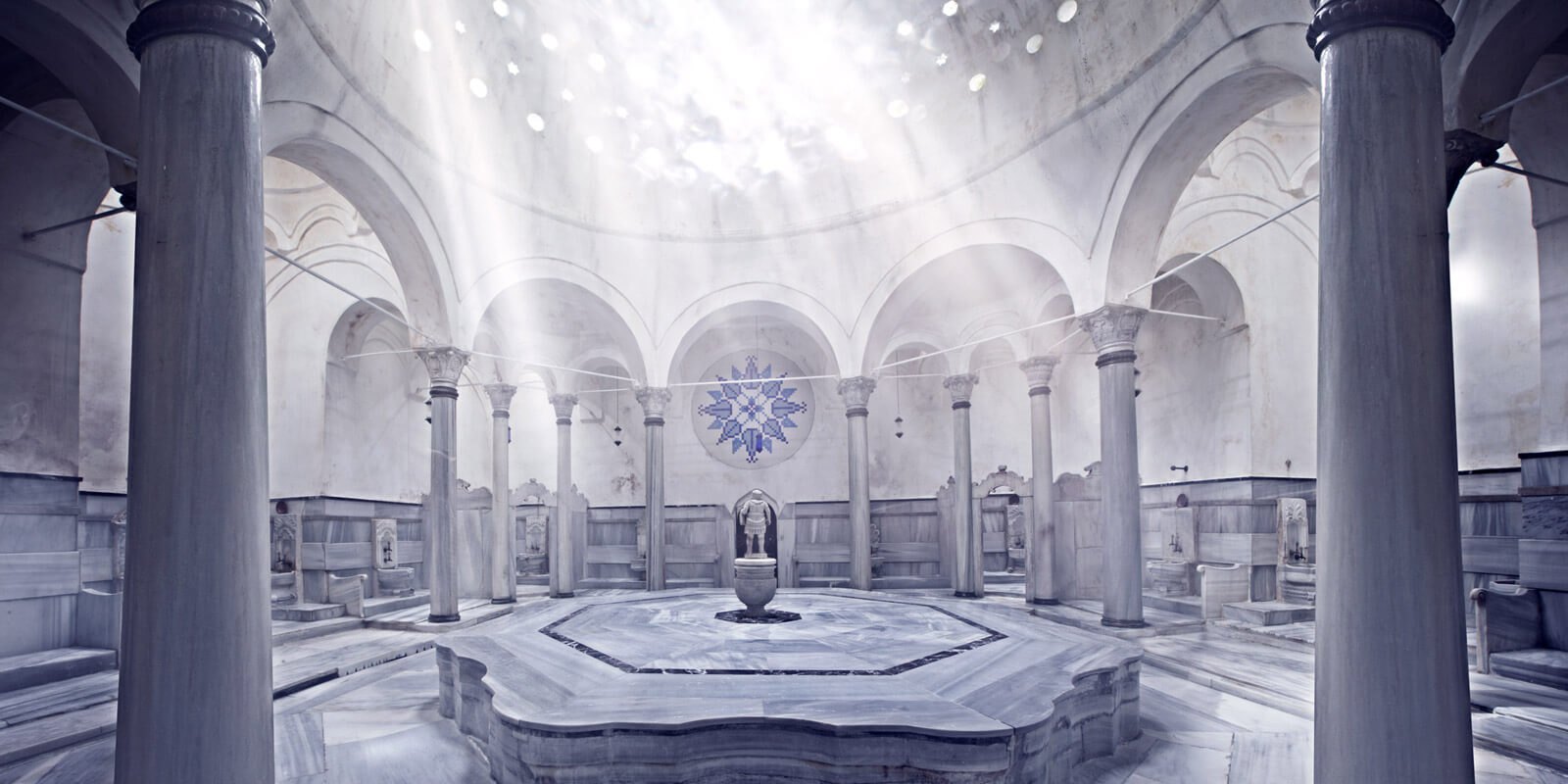
Photo Credit
Image courtesy of © Cağaloğlu HamamıWhat should you pack for Istanbul’s most beautiful rooms? Less than you think. The city’s strictest dress codes are not at the door of a club but at the door of a bath and a mosque, and at both the wardrobe can be borrowed. Here is what the hammams and Hagia Sophia ask of you, from their own pages, checked in November 2026.
Dressing for the steam
Istanbul’s strictest dress codes are not at the door of a club but at the door of a bath and a mosque. The good news is that at both, the wardrobe can be borrowed, and nobody expects you to arrive in costume. Think of it as hospitality with a dress code attached.
At Cağaloğlu Hamamı, built in 1741, the answer to what to bring is a single word: nothing. The hammam provides the peştemal, the towel, single-use slippers, the scrub mitt, linden shampoo, conditioner, body lotion and olive-oil soap. You may wear swimwear underneath if you prefer; a peştemal alone is also fine, and has been for nearly three centuries.
It is a double bath, with separate sections for women and men since 1741; women are attended by women and men by men, and there are no couples’ services. Children under 6 are not admitted, and guests under 18 come with an adult of the same gender. It is not recommended after alcohol or a heavy meal, nor on an empty stomach, nor for guests with heart, diabetes or respiratory conditions, and pregnant guests are not served.
The rituals run from about 45 minutes to two and a half hours, and how long you rest in the cool room afterwards is up to you: the hammam says it never rushes its guests, which may be the most luxurious line on any spa menu. Tell the attendants at the entrance about sensitive areas, skin conditions or allergies.
Covering up for Hagia Sophia
Hagia Sophia is a working mosque, and the rules are set out on the Istanbul Directorate of Culture and Tourism’s page. Women should wear a head covering to enter. If you have come without one, headscarves and body covers are sold at the ticket booth, opposite the Fountain of Sultan Ahmed III, where foreign visitors enter through a temporary gate. Museum passes are not valid here.
Istanbul’s strictest dress codes are not at the door of a club but at the door of a bath and a mosque.
That body covers are on sale too tells you the rest: come dressed for a place of worship, not a beach. Inside, the page asks visitors not to stare at or photograph people at prayer, and the visiting area closes between 12:00 and 14:00 on Fridays for Friday prayers.
A scarf worth owning
All of which makes a good scarf the most useful thing in an Istanbul suitcase. Vakko began in 1934 as a small millinery shop and still sells hats alongside scarves and shawls; Kutnia prints silk in patterns named after Zeugma. A square of silk does duty at the mosque door at noon and at dinner in Nişantaşı by night. It is the rare souvenir that earns its keep before you have even flown home.

Photo Credit
Image courtesy of © Mustang Joe · CC0 via Wikimedia CommonsOur advice: book the hammam ahead, especially for evenings and weekends, and go before lunch rather than after it. For a first visit, Cağaloğlu’s Istanbul Dream, at about 45 minutes, is the gentlest introduction. Keep a scarf in your bag for Hagia Sophia and the city’s other mosques, avoid Friday midday, and leave the camera in your pocket while people pray. Grooming beyond the hammam is covered in our Beauty & Grooming list.
Why it's on our list
- Dressing for the steam
- Covering up for Hagia Sophia
- A scarf worth owning
Location
The map comes from Google Maps, which sets its own cookies once it loads.
More in depth
 The Fitting RoomFrom a hat shop to a silk loom: Nişantaşı’s fashion housesHow a 1934 hat shop became Vakko, Beymen’s 1987 promise, and the rescue of Gaziantep’s kutnu silk.
 The back storyMeze, kebab and the lokanta: the Istanbul tablePalace kitchens, kebabs, olive-oil dishes and the humble lokanta.
 The back storyThe best restaurants with a Bosphorus viewDinner on the Bosphorus, with two continents either side of your table.